
6.16 Proportion of elderly residents
Version 3.1 by Emily West on 2022/01/25 09:54
6.16 Proportion of elderly residents
Project Name: PHUSICOS
| Pillar of Sustainable Development | Societal challenge |
|---|---|
| People | 6 - Place Regeneration |
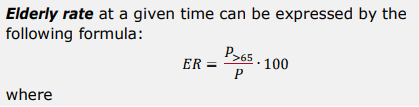
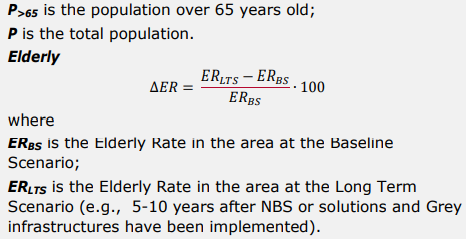
Description | The Indicator can be defined as the change, in terms of percentage, of the elderly rate in the area where the new infrastructure (both NBS, Hybrid solutions and Grey infrastructures) is implemented. This Indicator will be equal to 0 in the Baseline Scenario and will be assessed in the Long Term Scenario computing the percentage difference between the Elderly Rate in the Design Scenario and the Elderly Rate in the Baseline Scenario. In the Long-term scenario Elderly Rate should be calculated considering statistical data made available some years after NBS/Grey/Hybrid solutions have been implemented. |
Scale as linked to D2.2 framework |
|
Data source [ link to data framework] |
|
Data needs |
|
Expected Outputs |
|
Calculation methods | |
Links and references |
|
Revisions
| Version | Name | Date | Changes made |
| 0.1 | Emily (EcoWise) | 25/01/2022 | Factsheet created |
